Biweekly pay and monthly bills? Learn how to budget on biweekly pay and forecast whether your checking balance will make it to payday.
January 4, 2026
If you're paid every other Friday and your rent, car payment, and credit card are all due on fixed calendar dates, you already know the feeling. You look at your checking balance and can't quite tell whether you're safe. The number is positive, but you don't know how much of it is already committed to bills that haven't cleared yet, or whether the next paycheck arrives before or after the next due date. So you run the math in your head, and you run it again a few days later, because the answer never quite settles.
That feeling isn't a sign you're bad with money. Most people who struggle with biweekly pay are already doing the things they're told to do — they track spending, they know their bills, they aren't being reckless. The struggle persists anyway, because the standard biweekly budgeting advice solves a different problem than the one you actually have.
This guide does both halves. First, how to budget on biweekly pay properly, because the budgeting question is real and worth answering well. Then the part the budgeting advice leaves out: why a perfectly good budget still can't tell you whether your checking account survives the month, and what does.
Start with the move that does the most work: build your budget around two paychecks per month, not the twenty-six you actually receive across the year.
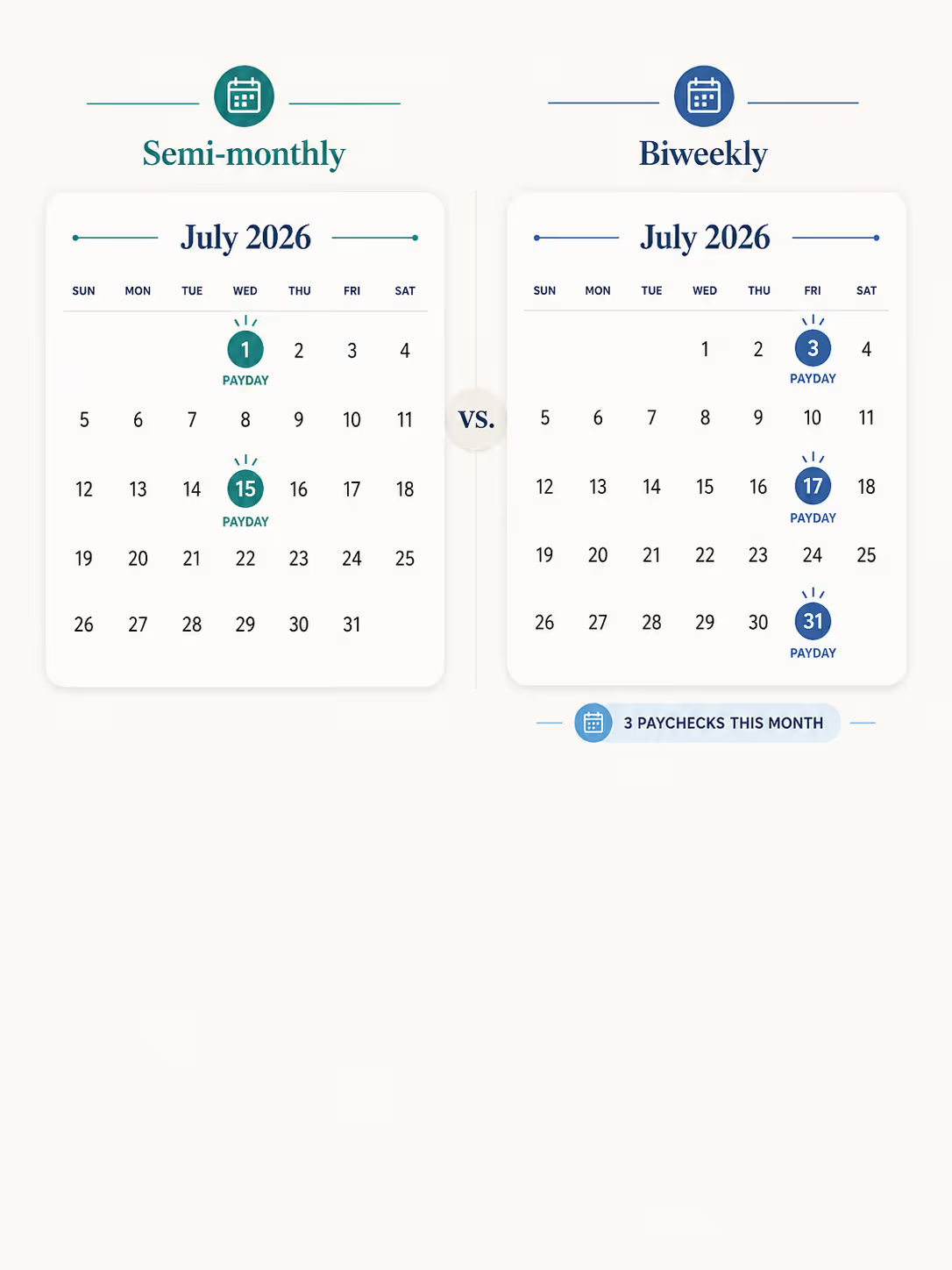
You're paid twenty-six times a year, which is two paychecks in most months and three paychecks in two of them. If you build your monthly budget on an average — roughly 2.17 paychecks a month — every single month feels slightly short, because the average month doesn't exist. The cleaner approach is to plan as if you get two paychecks a month and cover your full set of monthly bills on those two. That makes your baseline budget conservative by design.
The two months a year when a third paycheck lands then become genuine surplus rather than money you've already spent on paper. These three-paycheck months are the single most useful lever you have on biweekly pay, and where that extra check goes is worth a deliberate decision rather than a default.
From there, the method matters less than the level you do it at. Whether you use zero-based budgeting, simple category limits, or whatever you'll actually maintain, build the plan around your total monthly income divided across categories — needs first, then savings and debt, then discretionary spending. What you should not do is try to assign specific bills to specific paychecks. It feels like the natural way to budget biweekly, but it's the one approach that breaks, and the reason it breaks is the whole point of this article. Keep your variable categories, like groceries and utilities, estimated on the high side, because a budget that under-counts the bills that move is a budget that lies to you in the direction that hurts.
Do all of this well and you'll have a sound allocation plan. You'll know what you can afford across the month. However, some weeks, you’ll still stare at your balance and not know whether you're safe — because allocation was never the thing biweekly pay broke.
A budget answers one question: given your income, how should you divide it across your needs and priorities? That's a question about allocation, and it treats your month as a single pool of money to be split.
The trouble is that a budget implicitly assumes the money is all there to divide. A monthly budget behaves as if your income arrives at the start of the month and your only job is to apportion it. It deals in monthly totals, not in the daily reality of when specific dollars actually land in and leave your account.
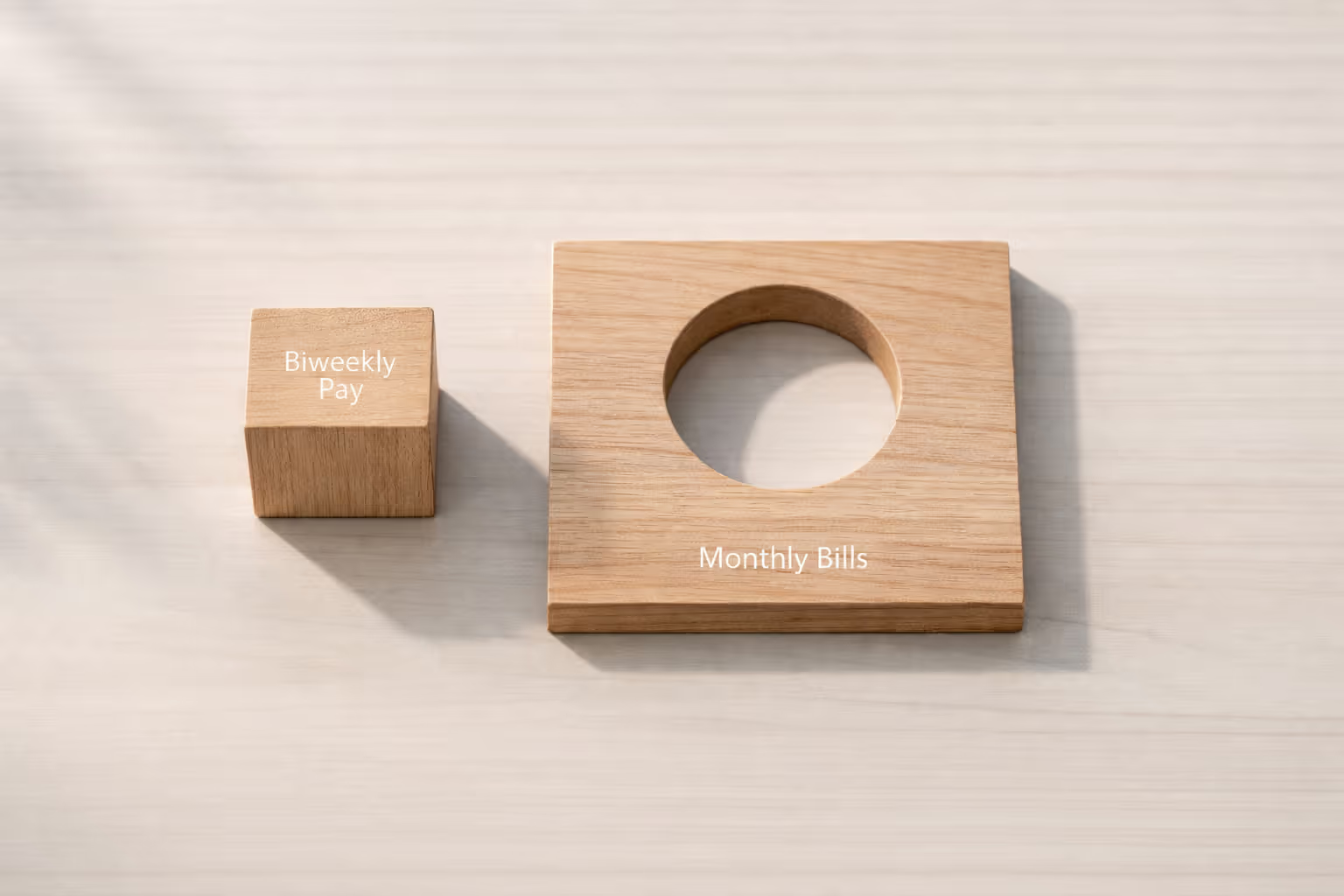
That assumption holds when your income and your bills run on the same clock. On biweekly pay, they don't. Your bills are anchored to the calendar — rent on the 1st, car payment on the 4th, credit card on the 19th. Your paychecks are anchored to the weekday — every other Friday, on a strict 14-day cycle that has nothing to do with the calendar. Each schedule is perfectly predictable on its own. But the relationship between ‘which paychecks covers which bills’ shifts every month.
One month, a mid-month paycheck arrives in time to cover the credit card before rent is due. The next month, the same paycheck lands a few days later, rent clears first, and suddenly the timing is tight in a way it wasn't four weeks ago. Your bills didn't change. Your income didn't change. Which paycheck is responsible for which bill changed, because the two cycles slid past each other again. This is why the mental math never ends: the pattern is never the same twice, so you can't learn it once and rely on it.
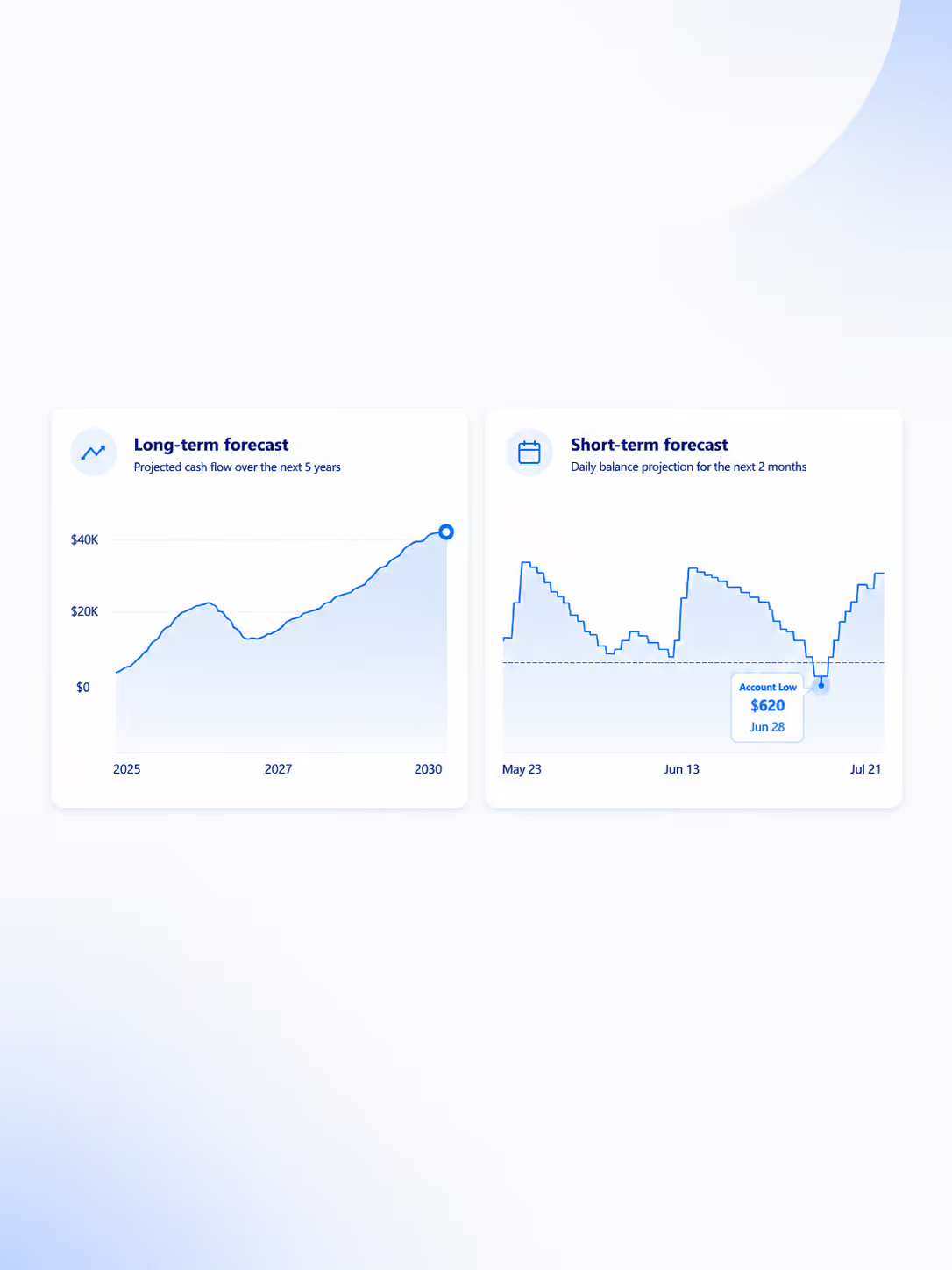
If the problem is timing, the fix is to see the timing. Checking account cash flow forecasting projects your balance forward day by day from your scheduled paychecks and bills, so instead of guessing at today's number you see exactly where your balance lands on every future date — when each paycheck lifts it, when each bill draws it down, and what the lowest point is over the weeks ahead.
This does two things immediately. First, it gives you advance warning: if you're headed to -$150 in two weeks, you find out two weeks early, while you still have options — shift a discretionary expense, move money over, ask a creditor to adjust a date. Second, it tells you what’s genuinely available to move out of checking by separating the part of your balance that's truly free from the part already committed to bills that haven't posted yet. The misalignment between your two cycles doesn't disappear. It just stops being yours to solve in your head every few weeks, because you can see it.
This is where forecasting changes the usual advice for biweekly pay. The conventional answer is to build a large checking-account buffer until you are “a month ahead,” with a full month of bills sitting in checking before the month begins. That can work, because enough padding makes timing problems less visible. But it also solves the problem via a blunt instrument: by keeping more cash in checking than you may actually need, just so the paycheck-and-bill mismatch stops causing stress.
Forecasting takes a more surgical approach. By projecting your checking balance forward, a forecast shows the lowest point your balance is expected to reach. Once you subtract the amount you want to keep in your checking account from that projected low point, the amount left over is genuine surplus — money your forecast shows is not already needed for upcoming obligations. That surplus can then be put to better use: paying down high-interest debt, building emergency savings, or moving cash somewhere it can work harder.
The goal is not to pad your checking account until timing no longer matters. The goal is to make timing visible enough that you can safely run checking leaner, keep the right minimum in place, and move the rest with confidence. A large cushion lets you stop looking. A forecast lets you look ahead — and make better decisions before the money is either spent, stranded, or needed.
A forecast is only as good as how well you maintain it, and the same few mistakes undo it every time.
Letting it go stale. A forecast you build on the 1st and ignore is describing a version of the month that no longer exists by the 15th. Transactions post for different amounts, on different days, or not at all, and each uncorrected difference nudges the projected low point away from reality. Keeping a forecast accurate is an ongoing practice, not a one-time setup — which is the part most people underestimate when they try to do it by hand.
Under-estimating variable bills. Credit cards, utilities, and groceries move. Estimate them high. The low point is the single number the forecast exists to protect, and a too-rosy estimate corrupts it first.
Forgetting the bills that don't show up monthly. Annual insurance premiums, quarterly payments, the once-a-year subscription renewal — none of these appear in a typical month, so they're easy to leave out, and then they punch a hole in the low point on the one month they land. Ensure you remember to include them in your saved cash flow events.
The three questions you probably started with — is this enough, can I safely move some out, should I worry about next week — aren't answerable by a budget, because a budget treats your month as one number. They're answerable by a forecast, because it treats your month as a sequence: this Tuesday's balance, next Friday's, the 23rd's after the credit card clears. Once you can see the sequence, each of those questions has a real answer, and the mental math stops.
The catch is the maintenance the pitfalls describe. Building a forecast once is easy; keeping it aligned with your account is the actual work. This is the part Centinel is built to handle. It connects to your checking account, re-anchors the forecast to your real balance every morning, and automatically matches the transactions that post against what it projected, surfacing only the handful of items that genuinely need your judgment. You get the day-by-day picture without having to rebuild it yourself.
Budget on two. Most months have exactly two paychecks, so a two-paycheck baseline covers your bills in every ordinary month and keeps your plan conservative. The two months a year with a third paycheck then give you real surplus to deploy deliberately rather than money you've already counted on.
Budget at the month level rather than pinning specific bills to specific paychecks, since which paycheck covers which bill shifts every month. Then forecast your balance forward so you can see the tight spots before they arrive instead of recalculating them in your head.
Treat it as surplus, not bonus spending money. After keeping a small minimum in checking, the highest-value uses are usually paying down high-interest debt and building emergency savings that earns a return — the same logic that governs what to do with extra money in your checking account in any month.
No, biweekly pay creates a timing problem and budgeting solves an allocation problem. A sound budget tells you what you can afford across the month; it can't tell you whether the cash is in your account on the day each bill clears. For that you need to see your balance projected forward; you need a forecast.
STAY A STEP AHEAD