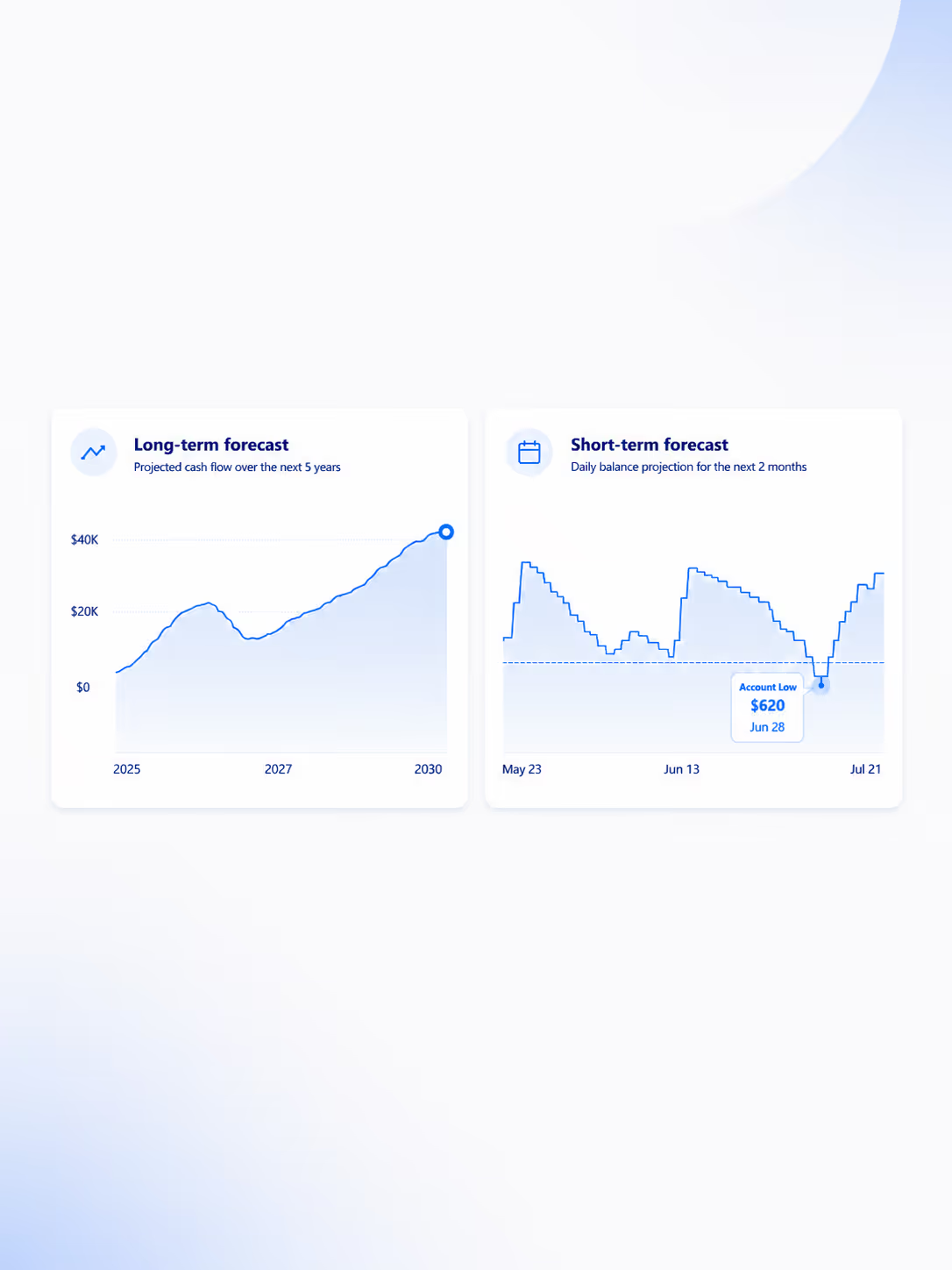
Use an app that forecasts your account balance daily, flags overdraft risk early, and shows what’s safe to spend or move.
April 26, 2026
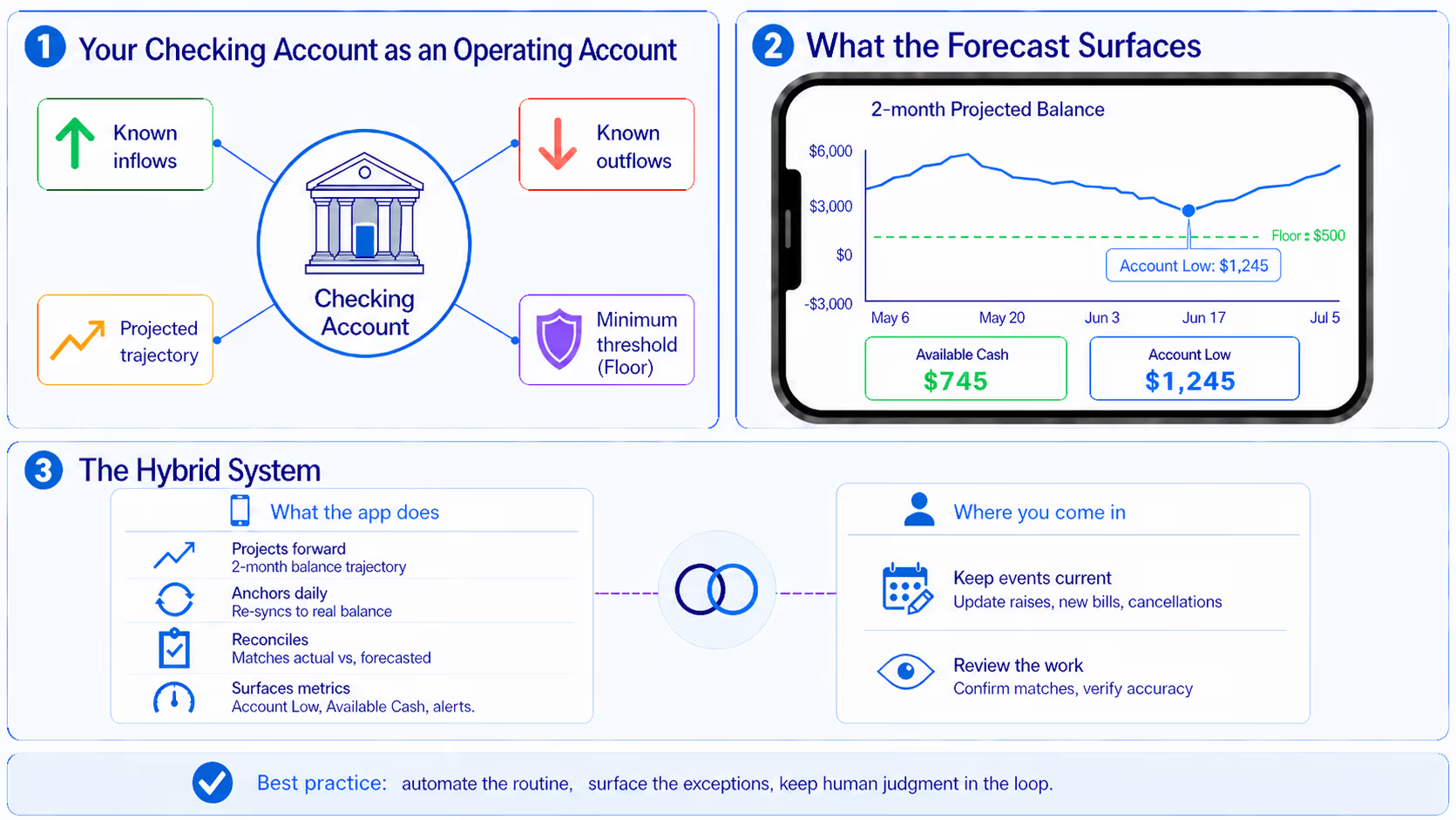
The best way to track your checking account's cash flow — to know whether your account is safe and, if so, what's safe to spend or move — is to use an app specifically designed for that purpose. In other words, effective cash-flow tracking is not just transaction monitoring; it is checking account cash flow forecasting — projecting your balance forward so you can see risk and surplus. The right app consistently anchors to your current balance, reconciles what actually posts against what was forecasted, projects your account's balance forward, and surfaces actionable metrics from that projection. The user and the app act together to maintain the system, which functions, for all intents and purposes, as an operating account. Centinel's checking account forecast is built based on these principles.
Most consumer finance content treats a checking account as a passive container — a place where money lands, sits briefly, and leaves. That framing is fine for budgeting, where the question is "where did my money go?" It's inadequate for cash flow tracking, where the question is "where is my money going, and am I safe?"
An operating account is different. It's an actively managed working balance with known inflows, known outflows, a forward trajectory, and a defined minimum threshold below which it's not allowed to fall. Corporate treasury teams have managed business accounts this way for decades. The principles translate directly to a personal checking account — what's been missing is a tool that automates the heavy lifting at the consumer level.
Treating your checking account as an operating account requires a system, not a habit. The system has two halves: what the app does, and where you come in.
Accurately tracking your checking account’s cash flow depends on more than displaying transactions. It requires a comprehensive cash flow forecasting architecture that projects the balance forward, re-anchors to reality, reconciles discrepancies, and turns the forecast into decisions.
The foundation is a forward projection. Starting from your current balance, the app steps day by day through a 2-month forecast horizon, adding scheduled income and subtracting scheduled expenses on their respective dates. The result is a complete day-by-day trajectory of your projected balance — every day with a number, every day's number derived from the day before. This trajectory is the raw material everything else operates on.
A forecast inherits the error of its starting point. If yesterday's projected balance is off by $200, every projected day going forward is off by $200 — not because the math is wrong, but because the math is correct from a wrong anchor. The fix is to re-anchor to your actual checking balance every day, automatically. Centinel does this via Plaid: each morning, your real balance refreshes, and the projection recalculates from where you actually are rather than from where the model thought you'd be. Drift — the gradual divergence between projection and reality — is eliminated at the source.
A forecast calculated once is accurate until something changes — a transaction posts a day late, an amount differs, a new charge appears. Reconciliation is the mechanism that catches these. When new transactions post, the app scores each one against your scheduled events and either matches them silently when confidence is high or surfaces them for your review when it isn't. It also flags forecasted events that didn't post when expected. Both directions matter: things that happened but weren't predicted, and things predicted that didn't happen. Centinel handles both through a reconciliation queue and didn't-post alerts, which together prevent small discrepancies from compounding into a forecast you can't trust.
The projection produces a 2-month trajectory; the metrics are what you actually act on. Three matter most. Account Low — the lowest projected balance over the entire window — answers "am I safe?" by surfacing the single bottleneck day when your account is under maximum pressure. Available Cash — Account Low minus your minimum threshold — answers "what can I spend or move?" by quantifying exactly how much is genuinely surplus on your most constrained day. And when the projection shows a shortfall, Centinel surfaces both the amount and the date — so you can prevent it rather than discover it after the fact.
A deterministic forecast — one built from the cash flow events you've defined rather than inferred from historical patterns — requires you in the loop. That's a feature, not a flaw: it's what makes the forecast immediately responsive to changes, transparent in its assumptions, and accurate from day one rather than after a model has accumulated weeks of training data. Two responsibilities are yours.
Your scheduled events — paychecks, rent, recurring bills, one-time events — define the shape of the projection. When something structural changes (a raise, a lease renewal, a new car payment), the event needs to be updated. The app surfaces candidates for new events when unmatched transactions appear, but the decision to add, modify, or delete an event is yours, because only you know whether a change is permanent or one-time. Maintaining an accurate checking account forecast over time comes down to this practice — catching structural changes and variance adjustments before they accumulate into meaningful drift.
When the app surfaces an ambiguous match or a transaction it couldn't classify, you confirm, correct, or dismiss. You're also the check on the matches — if you spot a match the app made incorrectly, you can unmatch it and reassign. This typically takes a minute or two during a weekly review, and the system learns from each correction, so the same items match silently next month with greater accuracy. Your role isn't constant attention; it's periodic judgment on the cases where automated confidence wasn't enough and a final check that the cases where it was enough are actually right.
Full automation produces errors in ambiguous cases because the model doesn't know what it doesn't know. Full manual maintenance produces fatigue, abandonment, and drift. The hybrid — the app handles continuous projection, daily anchoring, and high-confidence matching, while you maintain your events, review what the app surfaces, and verify its work — gives you the leverage of automation without the silent failures of an opaque model.
This is the same architecture corporate treasury teams have used for decades: automate the routine, surface the exceptions, keep human judgment in the loop where it matters. Centinel brings that discipline to a consumer checking account. The result is a forecast you can actually trust to answer the question you came with — am I safe, and what's available — without requiring you to become an analyst to maintain it.
STAY A STEP AHEAD