Paid biweekly? Find your 2026 3-paycheck months from your first payday — plus what to actually do with the extra check so it doesn't just disappear.
May 30, 2026
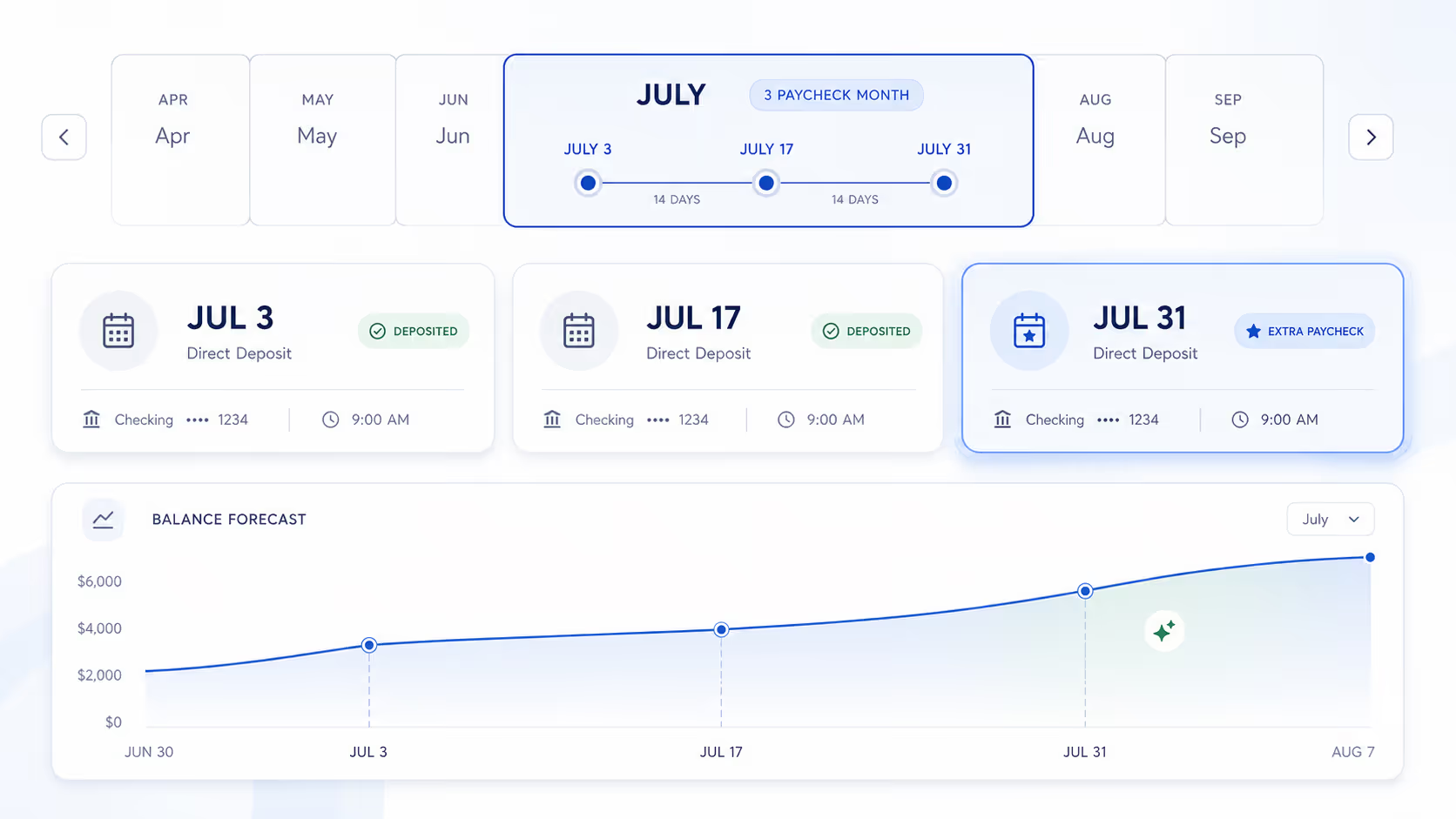
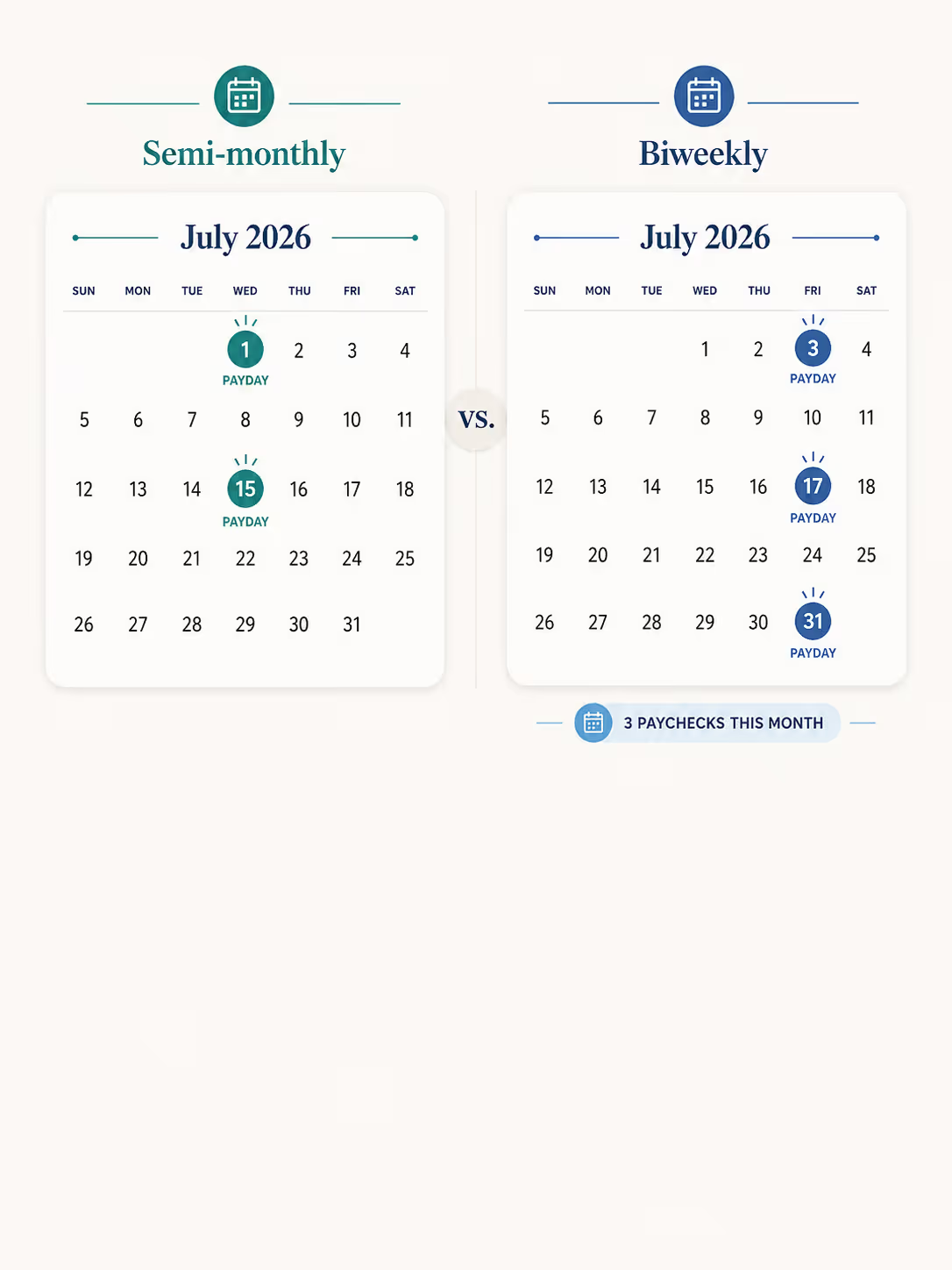
If you're paid every other week, two months in 2026 will hand you three paychecks instead of the usual two. Which two months depends on when your first paycheck of the year landed: if it was Friday, January 2, your three-paycheck months are January and July; if it was Friday, January 9, they're May and October.
That extra check feels like found money, and how you treat it is the difference between a year you got slightly further ahead and a year you didn't notice it happened. The short version: it isn't really a bonus, and the best thing to do with it depends on where your overall finances stand. Here's the full picture.
For anyone paid biweekly — every other Friday is the most common version — the answer comes down to which Friday your first 2026 paycheck arrived on. There are two schedules, and they produce different months:
If you're not paid on Fridays, the same logic still applies — just to your own payday. A three-paycheck month is any calendar month in which your payday lands three times instead of twice. Pull up your pay calendar, find the months with three pay dates, and those are yours. It works out to exactly two such months in a normal year, because twenty-six biweekly paychecks divide into twelve months as ten months of two and two months of three.
The reason these specific months carry a third check is that they contain five of your paydays instead of four — for Friday earners, a month with five Fridays. 2026 has four of them: January, May, July, and October. Which two are yours depends on your schedule — a January 2 start picks up the extra check in January and July, a January 9 start in May and October. (If you're paid weekly rather than biweekly, all four are five-paycheck months for you.) Every other month in 2026 is an ordinary two-paycheck month.
A related question people ask is how many pay periods 2026 has overall. For most biweekly workers it's the usual twenty-six. For a smaller group — those whose first payday of the year fell on January 1, which was a Thursday in 2026 — 2026 is a twenty-seven-paycheck year, which is a rarer event covered below.
It's worth being honest about what the third check is, because the framing changes what you should do with it.
The third paycheck isn't a bonus. It's part of your normal annual pay, the same as every other check. You earn the same amount over the year regardless of how the calendar slices it into deposits — twenty-six checks of the same size add up to the identical annual total whether two of them happen to share a month or not. Nothing extra was earned. The calendar just delivered your ordinary pay in a lumpier pattern that month.
What makes it feel extra is how most people budget. If you plan around two paychecks a month — which is the right way to budget on biweekly pay because it keeps your baseline conservative — then your regular bills are already covered by the first two checks of a three-paycheck month. The third one lands on top of a budget that didn't expect it. That's real surplus, created by the way you planned, not by the calendar gifting you anything.
That distinction matters because "bonus money" invites bonus spending, and a check that's genuinely surplus deserves a deliberate decision instead.
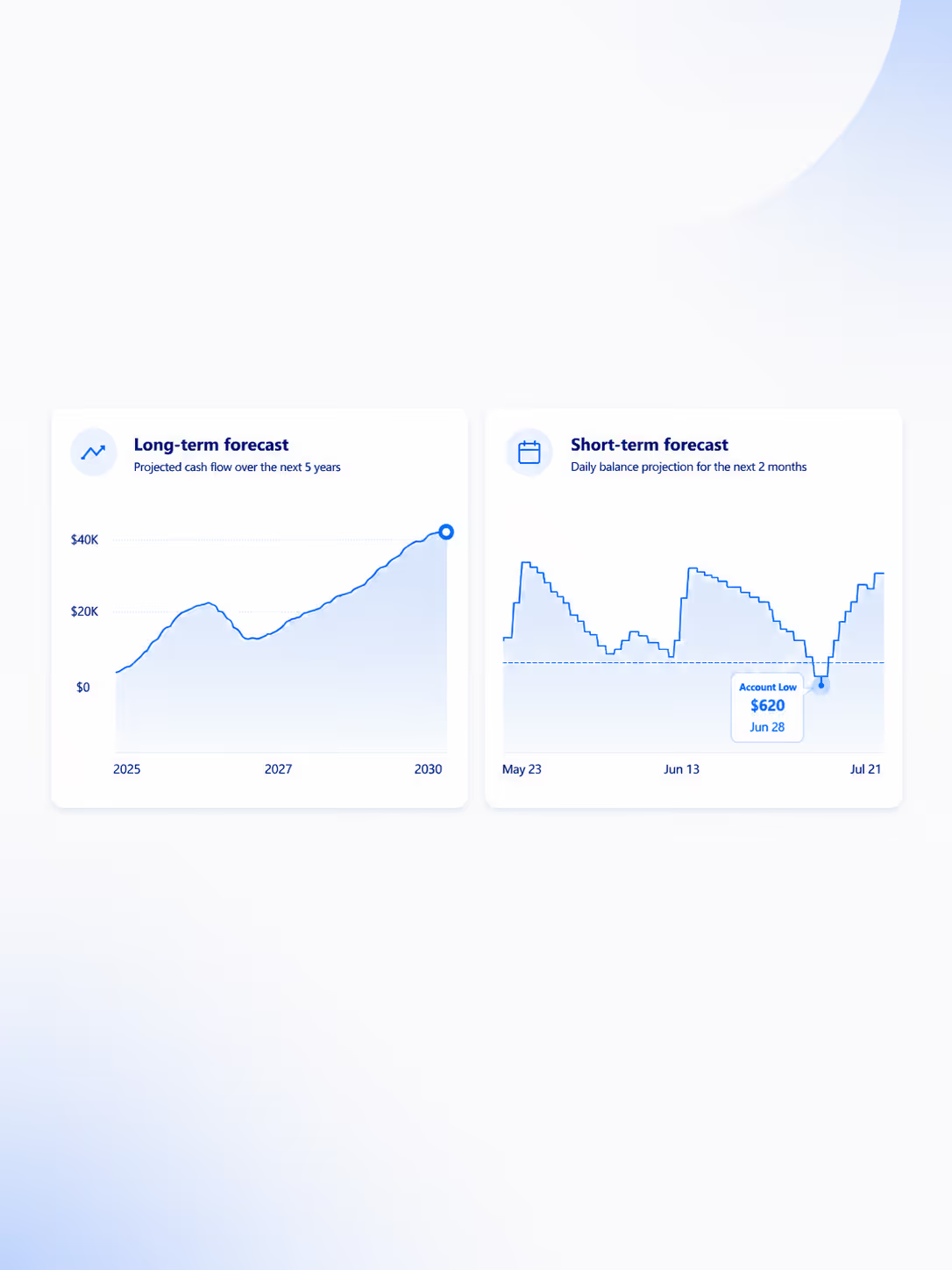
Before you assign the extra check anywhere, confirm it's actually free. A third paycheck lands in a specific month, and that month may already have an irregular bill waiting in it — an annual insurance premium, a quarterly tax payment, a renewal you forgot is due. The surplus is only surplus after those are accounted for. The cleanest way to check is to look at a cash flow forecast of your checking account, which shows both (i) whether the extra cash is truly uncommitted or already spoken for by something coming later in the month, and (ii) how much is actually genuinely available.
Once you've confirmed it's genuinely surplus beyond the minimum you want to keep in your checking account, what to do with the extra money follows a settled hierarchy:
The reason this ordering works is that each step removes a more expensive problem before funding a less urgent goal. And because you know two of these months are coming every year, deciding in advance where the check goes turns a twice-a-year windfall into a predictable engine for getting ahead.
Because the cadence carries forward, your 2026 schedule determines your 2027 one:
After that, the simplest way to find your three-paycheck months in any year is the method above: look at your pay calendar and find the months your payday falls three times. The deployment logic never changes — confirm the surplus is real, then run it down the same ladder.
It depends on when your first 2026 paycheck arrived. If it landed on Friday, January 2, your three-paycheck months are January and July. If it landed on Friday, January 9, they're May and October. More generally, it's any month in which your payday falls three times.
It is if your first 2026 paycheck arrived on Friday, January 2 — that schedule gets three paychecks in January and July. If your first 2026 paycheck arrived on January 9, your three-paycheck months are May and October instead.
It is if your first 2026 paycheck arrived on Friday, January 9 — that schedule gets three paychecks in May and October. If yours arrived January 2, your three-paycheck months are January and July instead.
Two, for anyone paid every two weeks. Twenty-six biweekly paychecks split into ten months of two and two months of three. A rare 27-paycheck year produces three.
Check which of your two three-paycheck months hasn't happened yet: January and July for a January 2 start, May and October for a January 9 start.
Most biweekly workers have 26 pay periods in 2026, which produces two three-paycheck months. Workers whose first payday of the year fell on January 1 have 27 pay periods in 2026 and three three-paycheck months.
Biweekly pay produces about 26.07 pay periods a year, and that fractional remainder accumulates until, roughly once a decade, a calendar year fits in a 27th payday. 2026 is one of those years for schedules whose first payday landed on January 1.
It depends on your schedule. Continuing from a January 2, 2026 start, your 2027 three-paycheck months are January, July, and December. Continuing from a January 9, 2026 start, they're April and October.
No. It's ordinary pay and is withheld the same way as any other paycheck. It only feels different because it arrives in a month your regular bills didn't claim it.
Treat it as surplus rather than spending money. After confirming it isn't needed for an upcoming bill by forecasting your checking account, the highest-value uses are building a small cash cushion (if you don’t already have one), then paying down high-interest debt and building emergency savings that earns a return.
STAY A STEP AHEAD