Extra money in checking? Here's how to split it between savings, high-interest debt, and investing.
May 26, 2026

Extra money in your checking account is a good problem — but it's still a problem. The gap between a wasted surplus and a well-deployed one usually isn't the amount. It's whether you have a repeatable framework for where to send it.
Whether the extra cash is a one-time windfall — a tax refund, a bonus, a rebate — or a recurring monthly surplus, the destinations are the same. This article picks up after you know your surplus — the part of your balance that's genuinely free, not already claimed by upcoming bills. If you haven't pinned that number down, determining what's safe to spend in your checking account is how to find it. With the number in hand, the decision follows a simple hierarchy — and the right answer depends on where you currently sit in it.
There's a tempting list of options — HYSA, CDs, money market, I-bonds, brokerage, retirement, 529, crypto — that makes this feel more complicated than it is. For surplus coming out of a checking account, the destinations collapse to three: liquid savings, high-interest debt, and long-term investing. The priority runs in four steps, though, because your emergency savings gets built in two stages — a small buffer early, the full reserve later.
Standard advice often leads with high-interest debt, and the math for that is strong. But it assumes you already have a buffer to fall back on. Without one, aggressive debt paydown tends to reverse itself — a surprise expense goes right back on the card. So the order starts with a basic buffer, moves to debt, then to the rest.
If a surprise car repair or medical bill would force you into debt today, your first surplus goes to a starter buffer: roughly one month of essential expenses, held in a high-yield savings account. This isn't your full emergency fund yet — it's the smaller, prior thing, enough that a minor shock doesn't unwind everything you're about to do.
That priority exists because every other move assumes you won't have to reverse it at the worst possible moment. Paying down debt aggressively feels productive until a medical bill forces you to put it all back on the card. Investing feels smart until you have to sell in a downturn to cover rent. A starter buffer is what makes every later decision stable. Once it's in place, move on — you don't need to fully fund three-to-six months before attacking high-interest debt.
With a starter buffer in place, surplus goes to high-interest debt, and the math is decisive: paying down a card at 22% APR is mathematically equivalent to earning a guaranteed 22% return, tax-free. No investment at that level of certainty comes close.
The cutoff is usually around 7–8% — the rough long-term return of a diversified stock portfolio. Debt above that, pay it down. Debt below it (a sub-4% mortgage, a 5% federal student loan) can generally stay on schedule while you put surplus elsewhere. Within high-interest debt, the standard approach is highest-APR-first (the "avalanche"); if you need momentum more than optimization, smallest-balance-first (the "snowball") works too. The method matters less than the priority: with a buffer in place, debt at 15%+ is almost always the best thing your surplus can do.
With high-interest debt cleared, bring your emergency fund up to a full three-to-six months of essential expenses — still in high-yield savings, where it stays liquid and earns while it waits. This is the reserve that covers real shocks: a job loss, a major medical event, a sustained gap in income. The starter buffer kept a small surprise from derailing you; this is what keeps a large one from doing the same.
With a full emergency fund and no high-interest debt, your surplus is genuinely optional cash, and the highest-value home for it is long-term investing. In order:
This tier is where real wealth is built — and where most of the damage is done when people skip the earlier priorities to get here too soon.
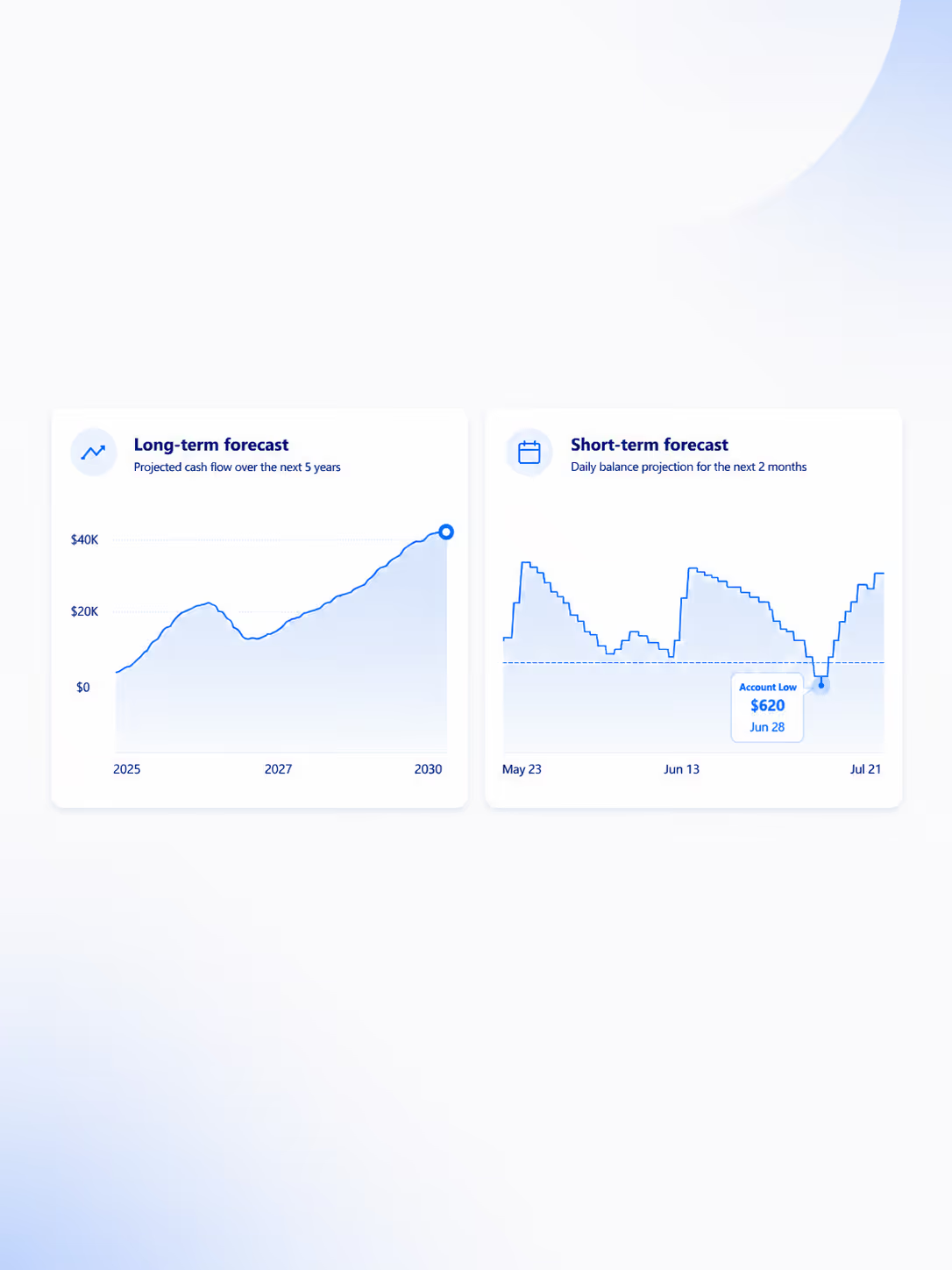
Extra money in your checking account is an opportunity, but only if you have a framework to act on it. A precise surplus number — identified through your forecast, not guessed at — turns a vague "I should do something with this" into a specific monthly decision.
The hierarchy is simple: a starter buffer so a small shock can't derail you, then high-interest debt, then your full emergency fund, then long-term investing. Don't agonize over the exact split — the math is forgiving, and a surplus left idle while you deliberate costs more than a slightly imperfect allocation. Pick the rung you're on and move.
What separates people who build wealth from people who don't is rarely the sophistication of the strategy. It's whether it runs month after month. Your checking surplus is a renewable resource; treat it like one.
It depends where you are in a short hierarchy: first a starter buffer of about a month of expenses, then any high-interest debt (roughly 7–8% APR and up), then your full emergency fund, then long-term investing. Work down the list — the right move is whichever rung you haven't cleared yet.
Build a small starter buffer first — about one month of essentials — so a surprise expense doesn't send you straight back into debt. Then attack high-interest debt aggressively, since a 22% card is a guaranteed 22% return. Finish funding your full emergency fund after the high-interest debt is gone.
Most advice says 1-2 months of expenses, but for a checking account specifically, the better target is usually smaller: a floor you stay above, not a balance you park. In practice, how much to keep in your checking account is often closer to 1-2 weeks of essential expenses, with the emergency reserve held separately. Anything consistently above that floor is surplus.
This article is for informational purposes and reflects general principles of cash flow management. It's not financial advice, and your situation may require different considerations. When in doubt, consult a financial professional.
STAY A STEP AHEAD